
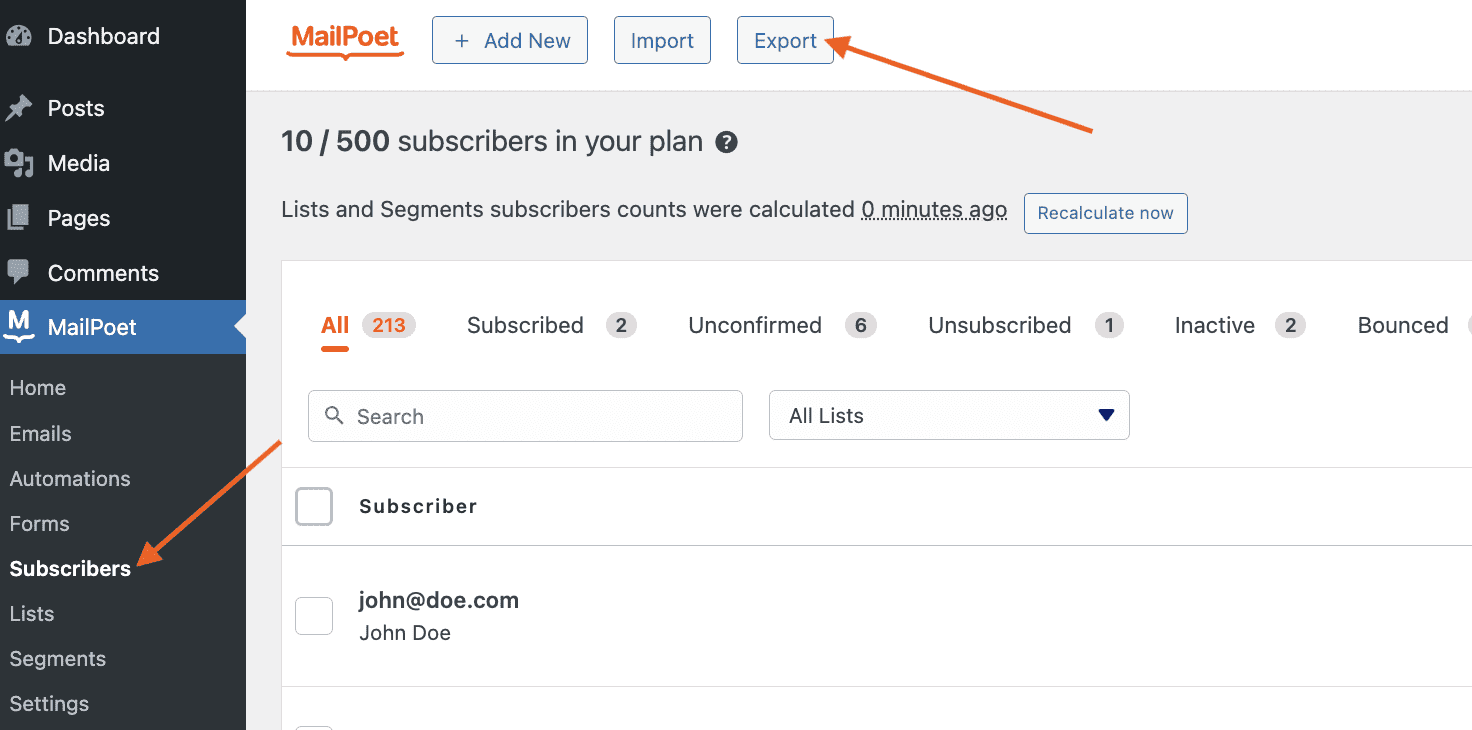
You can export your subscribers’ lists and/or segments by going to the MailPoet > Subscribers page and click on the “Export” button:
The next page shows the settings options for you to select which lists/segments and fields you want to export:
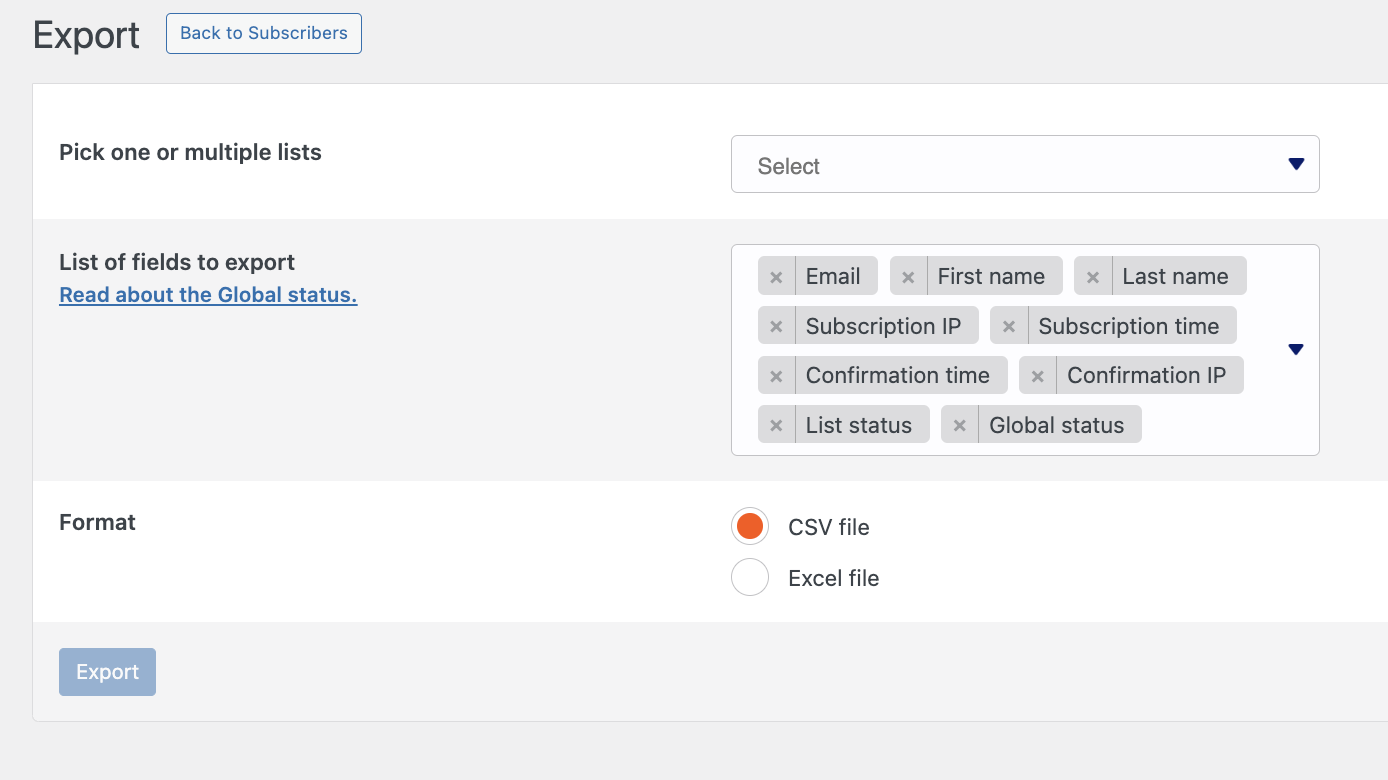
Selecting lists/ segments
You can then select multiple lists (they will be all exported on the same file) to export, or do it one by one if you want to keep them in separate files. Please note this is also valid for Segments, as you can select them to be exported as well.
Selecting fields
You will see a set of default fields preselected for export, including email, first name, last name, and status. You can click on the selection field to open a drop-down menu with more options:
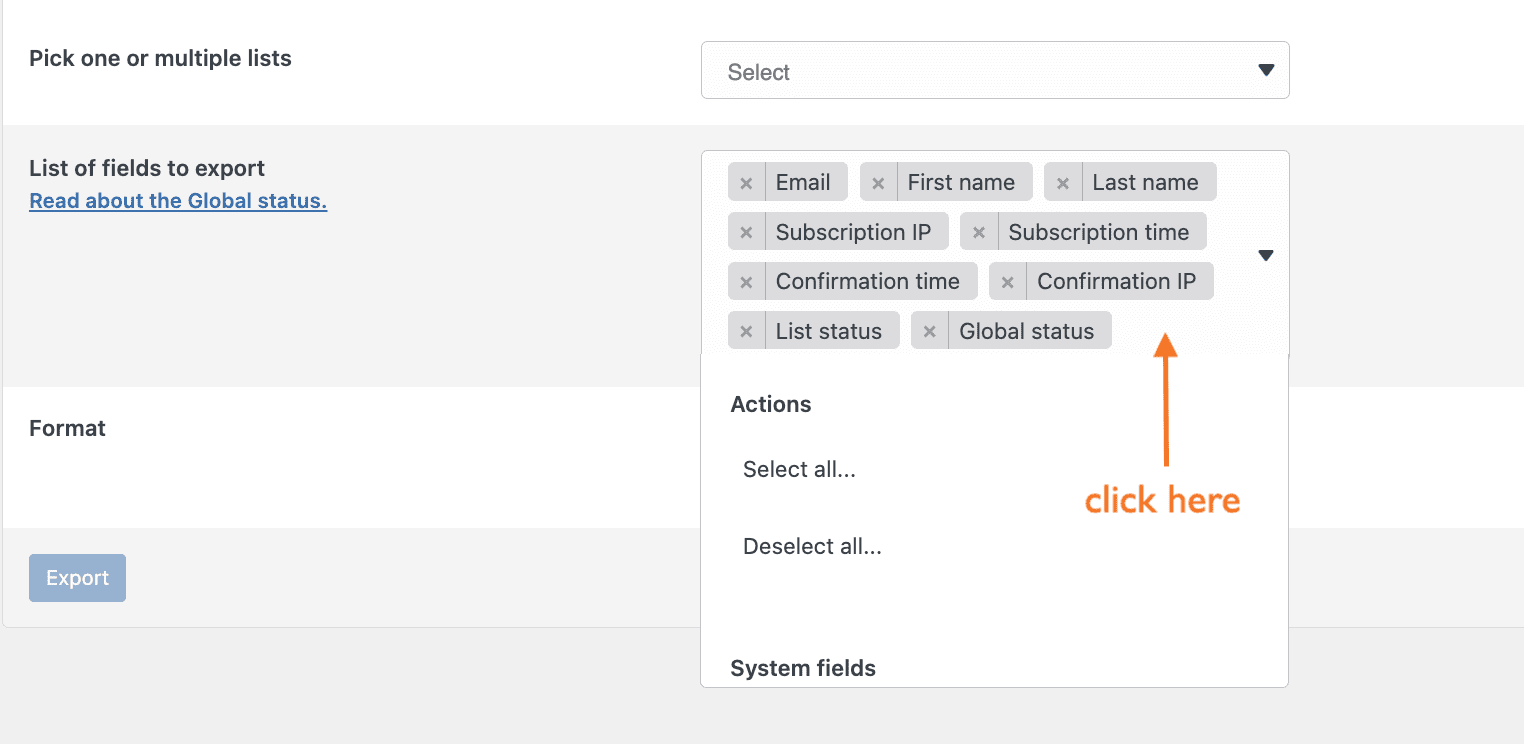
From the drop-down you can select or deselect individual fields, choose custom fields, and add any additional fields you need.
IP address fields (subscribed IP and confirmed IP) are not selected by default to protect subscriber privacy, but they remain available in the drop-down if you need to include them. For more details on exporting IP addresses, see How to Export Subscribers IP Addresses.
It is not possible to export other subscriber data such as “Subscribed on” or “Confirmed on” using this feature. This can be done only if you export it directly from the table where your subscriber data is stored in your database.
Exported file
You can choose to export the data as a CSV or Excel file.
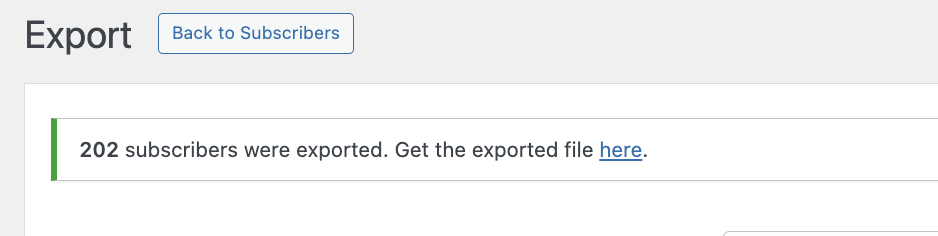
If the download does not start automatically, you will see a message at the top of the page with a link to download the file.
MailPoet does not store your mailing lists, newsletters, or your subscriber data. It is only stored on your own website’s database.
Troubleshooting
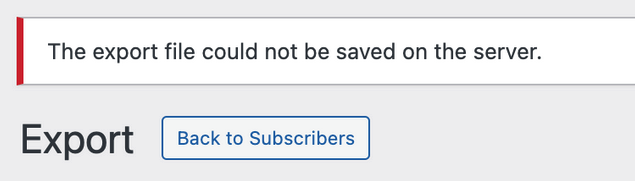
If you run into the error “The export file could not be saved on the server”, there are a variety of things you can check.
- Check to ensure file and folder permissions on your server are set correctly — your hosting should be able to assist with making sure your site can write files to the server, and that there is enough space available
- Check for any fatal errors in the server’s PHP logs that might explain what is breaking the export
- Perform a conflict test to rule out issues with code running in the site’s theme or other active plugins